Blog
.png)
Nick Bonitatibus
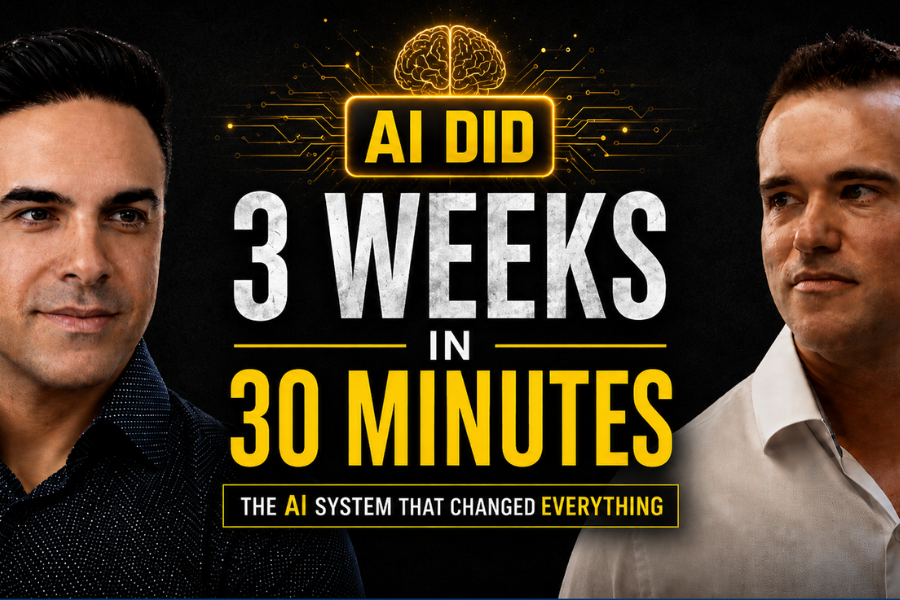
In this interview, Johnny Mako of Platinum Care Group shares how his team is using AI to streamline recruiting, scheduling, compliance, care-note analysis, and other day-to-day operations.
From saving a recruiter around 20 hours per week to completing weeks of administrative work in minutes, Johnny breaks down what’s working, the tools they’re using, and why human oversight and data security still matter.
Watch the full video to see AI in action at a home care agency.
AI is becoming increasingly relevant in home care, but for agency owners and operators, the practical question remains: Where can it actually make a meaningful difference?
Nick Bonitatibus recently had the opportunity to sit down with Johnny Mako, Vice President of Platinum Care Group, for a conversation about that exact question.
Nick was glad to have Johnny on the show because, rather than discussing AI only in theory, Johnny could share how his team is actually using it inside a home care agency.
With 14 years of experience in home care and a background in technology, Johnny now oversees AI and technology implementation at Platinum Care Group. During the conversation, he shared how the agency is applying AI to recruiting, scheduling, compliance preparation, care-note analysis, and other operational workflows.
One example stood out: a project Johnny estimated could have taken a team two to three weeks was completed with the help of AI in roughly 30 minutes.
But the conversation wasn't simply about speed.
A consistent theme was the importance of using AI with appropriate human oversight, clear processes, and safeguards around company and client information.
Here are some of the key takeaways from Nick and Johnny's conversation.
Johnny began experimenting with AI shortly after ChatGPT became available.
Like many early users, he initially treated it as something similar to a more personalized search tool. Over time, he started using AI to process information, explore ideas, and approach problems from different perspectives.
As he became more familiar with its capabilities and limitations, he began considering how the technology could support other people within the business.
That eventually led to a broader question:
How do you build a company that can use AI effectively as the technology continues to develop?
For Platinum Care Group, the answer wasn't simply adding more AI tools. It meant thinking about infrastructure, company processes, permissions, policies, and how AI fits into existing workflows.
Platinum Care Group primarily operates within the Microsoft ecosystem, which led the company to adopt Microsoft Copilot for its internal AI infrastructure.
A major consideration was governance.
The agency uses SharePoint to organize information across areas such as recruiting, operations, marketing, executive leadership, and HR. Different employees are given access based on their roles and responsibilities.
That structure also affects what information AI can access.
For example, an employee without permission to view HR information should not be able to retrieve that information simply by asking an AI assistant.
At the same time, authorized leaders can use AI to analyze information across departments without repeatedly uploading individual files for context.
For home care agencies handling sensitive company, employee, and client information, this type of structure is an important consideration when introducing AI.
One of the most interesting examples Johnny shared came while Platinum Care Group was preparing for a regulatory survey.
The agency needed to review records for more than 150 active clients and determine whether important documentation was present.
That included items such as:
Johnny estimated that manually compiling the information could have taken him around three weeks—or required a team working for two to three weeks.
Instead, he used an AI agent to examine the agency's files and create an active client list in Excel.
The AI organized the relevant information and identified which documentation appeared to be present.
The process took roughly 30 minutes.
However, the agency didn't simply accept the AI-generated results.
Johnny instructed the system to provide links to the source documents so staff could review the underlying files themselves.
In some cases, the AI wasn't confident about whether a signature was present, so those records were flagged for human review.
The result was not the elimination of human verification. Instead, AI significantly reduced the work required to determine where the team needed to focus its attention.
Recruiting is another area where Platinum Care Group has incorporated AI.
The agency operates in a competitive caregiver hiring environment, making the time between an application and an interview particularly important.
Johnny explained that their previous process could take close to a week between receiving an application, completing a screening, and reaching the interview stage.
To address that bottleneck, the agency began using Care Hero for AI-assisted applicant screening.
When someone applies, they can receive an opportunity to complete an initial screening shortly afterward—including outside normal business hours.
According to Johnny, approximately half of these screenings have taken place after hours.
The impact on the recruiting team's workload has also been significant.
Johnny estimates that the tool saves their recruiter approximately 20 hours per week on screening alone.
The agency has also reduced the early portion of its recruiting funnel from around a week to approximately two days.
Importantly, the AI isn't responsible for the entire hiring decision. It helps handle an initial, repetitive part of the process while the recruiter remains involved.
Scheduling is another time-intensive part of running a home care agency.
When a caregiver calls off shortly before a shift, schedulers may need to contact multiple people individually to find coverage.
Platinum Care Group uses Phoebe, an AI scheduling tool that integrates with its existing systems.
The system can reach out to caregivers based on factors such as skills and availability, track responses, follow up through text or phone calls, and provide the scheduling team with potential options.
But the agency has deliberately kept human verification in the process.
Even when the system identifies a caregiver who is willing and available to take a shift, a team member still reviews and finalizes the assignment.
The technology helps reduce the manual outreach required without removing the scheduler from the decision.
Johnny's team is also experimenting with AI agents that analyze care notes.
Rather than looking at each note independently, AI can review information across a longer period and identify potential patterns.
For example, it may identify changes in eating habits, recurring concerns, or indications that a caregiver-client relationship may require attention.
Those insights can then be brought to the care management team.
Again, AI isn't making the final care decision.
Its role is to help surface information that a person may want to investigate further.
Despite the agency's growing use of AI, Johnny was clear that there are areas where the human element remains essential.
Care planning is one example.
Platinum Care Group continues to rely on people to conduct assessments and develop initial care plans because those conversations often involve clients and family members discussing sensitive and personal circumstances.
Technology may be able to analyze information, but it doesn't replace the relationship involved in those conversations.
AI can still support the process later.
After several months of care notes have accumulated, for example, AI can help compare what's happening in practice with the original care plan.
If trends suggest that a client's needs are changing, the care team can use that information as additional context when discussing possible adjustments with the family.
The distinction is important: AI can provide information, but people remain responsible for applying judgment.
One of the more practical frameworks Johnny shared was his approach to progressive trust.
Rather than immediately giving an AI system the ability to take action independently, he gradually increases its responsibility as it demonstrates reliability.
The process begins with observation.
Can the AI perform the basic task correctly?
Next, it may be allowed to make recommendations.
If those recommendations prove reliable, it can begin preparing or drafting actions for a person to approve.
Eventually, limited autonomy may be introduced within clearly defined parameters.
Even then, exceptions can be escalated back to a human for review.
Johnny summarized the tradeoff clearly: greater AI capability can create more opportunity, but greater access can also create more risk.
That makes guardrails important.
For home care agencies, adopting AI involves more than deciding which tools can save time.
There are also questions around privacy, permissions, regulatory requirements, and how company information is handled.
Johnny emphasized the importance of having formal AI policies and giving employees approved tools for company work.
Without those systems in place, employees may turn to their personal AI accounts to help with work-related tasks, potentially creating unnecessary risks around sensitive information.
Agencies should also understand how outside AI vendors manage their data.
Questions worth considering include what information a vendor can access, how that information is stored, what security protections are in place, and what regulations apply in the agency's jurisdiction.
AI providers may offer the technology, but agencies remain responsible for evaluating whether and how those tools should be used within their organizations.
Another useful observation from Johnny's experience is that AI doesn't necessarily solve an entire process at once.
Sometimes it simply makes the next problem easier to see.
Recruiting is a good example.
Automating applicant screening helped Platinum Care Group dramatically reduce one delay in its recruiting funnel.
Once that step became faster, however, other bottlenecks further down the process became more visible.
That can be valuable in itself.
Instead of viewing AI as a tool that automatically fixes an entire workflow, agencies can use it to improve individual steps while continuing to evaluate the broader process.
For agencies that are still early in their AI adoption, Johnny's recommendation was straightforward: start small and start with yourself.
Using AI personally gives leaders an opportunity to understand how it works before applying it to business processes.
That includes learning where it performs well, where it makes mistakes, what kind of instructions produce better results, and when human verification is necessary.
From there, agencies can begin identifying low-risk, repetitive workflows where AI may be useful.
The goal doesn't need to be complete automation.
In many cases, the immediate opportunity is simply to reduce administrative work, organize information more effectively, identify patterns, and help staff make better-informed decisions.
Nick and Johnny's conversation provided a practical look at what AI adoption can already look like inside a home care agency.
The opportunity isn't limited to one area.
Recruiting, scheduling, documentation, compliance preparation, care-note analysis, internal knowledge, and administrative workflows can all potentially benefit from thoughtful use of AI.
But the examples from Platinum Care Group also show why implementation matters.
AI can make mistakes. Sensitive data needs appropriate protection. Regulations need to be considered. And decisions involving clients, caregivers, and employees still require human judgment.
For home care agencies exploring the technology, the starting question doesn't have to be:
“What can we automate?”
A more useful question may be:
“Where can AI reduce unnecessary work while helping our team make better decisions?”
That keeps the focus where it belongs; not on adopting AI for its own sake, but on using it where it can create practical value.
Get the latest insights and blog posts delivered straight to your inbox weekly.
Unlock your potential and start generating leads effortlessly with our proven program.
Schedule A Call